Cloud AI is great… until you deploy it somewhere that isn’t a demo.
Out in the field, you rarely get perfect connectivity, clean data paths, or a predictable network. You get latency you didn’t budget for, uplinks that disappear at the worst time, and security constraints that make “just send it to the cloud” a non-starter. That mismatch is the AI Gap: the difference between what AI can do in theory and what real-world deployments will actually tolerate.
That’s why the right strategy isn’t “cloud-first.” It’s cloud-optional. The goal is straightforward: Rugged, Remote, Reliable, Secure, Fast, not as a slogan, but as operating requirements for when AI must work where it matters most.
AI Inference at the Edge on Rugged Devices
AI inference at the edge means running trained machine-learning models directly on the device, close to where data is generated, rather than relying on a remote cloud service to make decisions. When you deploy that capability on rugged embedded hardware, it changes the game. You get real-time decision-making that doesn’t collapse the moment the environment gets harsh, the network gets spotty, or the site becomes hard to reach.
In practical terms, edge inference enables AI to be used in remote facilities, moving platforms, industrial sites, and contested environments. If the mission depends on consistent performance, then AI cannot be dependent on a clean internet connection.
Why Cloud-Optional Matters
“Cloud-optional” doesn’t mean anti-cloud. It means anti-dependency. The cloud is still valuable for model updates, centralized monitoring, long-term analytics, and aggregating insights across sites. But inference and decision-making shouldn’t require a round trip to a data center just to function.
A cloud-optional design lets systems run autonomously when connectivity is limited or completely denied, while still allowing synchronization when networks are available. That means you can deploy systems that keep operating through outages and dead zones, and then catch up, sending only what is relevant, when the connection comes back. The approach turns the cloud into an advantage, not a single point of failure.
Closing the Gap Where Cloud-First AI Struggles
Latency gap
Cloud inference requires data to travel out and back from a remote data center, which adds delay and unpredictability. In many use cases, unpredictability is the real problem. If your system needs to react in the moment, whether it’s robotics, industrial automation, or time-sensitive monitoring, then local inference on rugged embedded systems keeps decisions fast and deterministic, turning “works in a demo” into “works in production.” With edge inference, decisions happen where the data is produced, and actions can be triggered immediately.
Connectivity gap
In real deployments, connectivity is never guaranteed. Remote sites lose uplinks. Cellular coverage fluctuates. Vehicles move in and out of service. Security policies block routes that looked fine on paper. With cloud-dependent AI, downtime often means intelligence stops. With a cloud-optional edge AI approach, your system keeps detecting, logging, and generating outcomes locally, and only syncs when it can. Network down shouldn’t mean “AI down.”
Bandwidth and Cost gap
Bandwidth and cost are the quiet killers at scale. Sending massive amounts of raw data, especially video, to the cloud is expensive, bandwidth-intensive, and operationally messy. The real cost is not just the internet connection bill; it’s cloud storage, retention requirements, egress fees, and the infrastructure upgrades you need just to carry the load. Edge inference flips the economics by analyzing data on-site and sending only what matters: events, metadata, short clips, or summaries. You stop paying to move raw data because what you really need are decisions.
Privacy and Security gap
For many organizations, privacy and security are non-negotiable. Sensitive data often cannot be transmitted offsite, or it simply shouldn’t be. Edge AI helps by keeping raw data on-premise and shares only approved outputs. This reduces the exposed attack surface area and aligns better with governance requirements, especially in high-consequence environments.
Edge-Case Operational gap
The messy reality is that the field is rarely like your training set. Lighting changes. Cameras get occluded. Weather happens. Processes drift. The environment is unpredictable by default. Edge computing doesn’t magically solve model drift, but it does make systems operationally manageable. You can monitor behavior on-site, adjust thresholds and workflows, capture the right examples for retraining, and iterate without shipping terabytes of raw data upstream, just to diagnose what went wrong.
Defense, Military, and Intelligence Applications
Cloud-optional edge AI is especially critical in defense and high-consequence environments. In denied or contested scenarios, connectivity may be limited, jammed, or simply unacceptable to rely on. Edge inference enables real-time ISR and video analytics, target recognition and tracking, electronic warfare and signal analysis workloads, autonomous and semi-autonomous vehicle operations, force protection and perimeter security, and tactical situational awareness, without making the cloud a dependency.
The bottom line is simple. Rugged edge AI delivers low-latency, secure, and resilient intelligence where cloud access is unreliable or unacceptable.
Cloud for Oversight, Edge for Action
This isn’t about replacing the cloud. It’s about building systems that keep working when reality shows up. Use the cloud where it’s strong—management, updates, analytics, aggregation. But keep inference and decision-making at the edge, where it remains fast, reliable, secure, and resilient.
That’s what “cloud-optional” actually means. It’s not a buzzword. It’s a design choice that closes the AI Gap and makes AI field-ready for your mission.
Want a Cloud-Optional Edge AI Platform That’s Built for the Field?
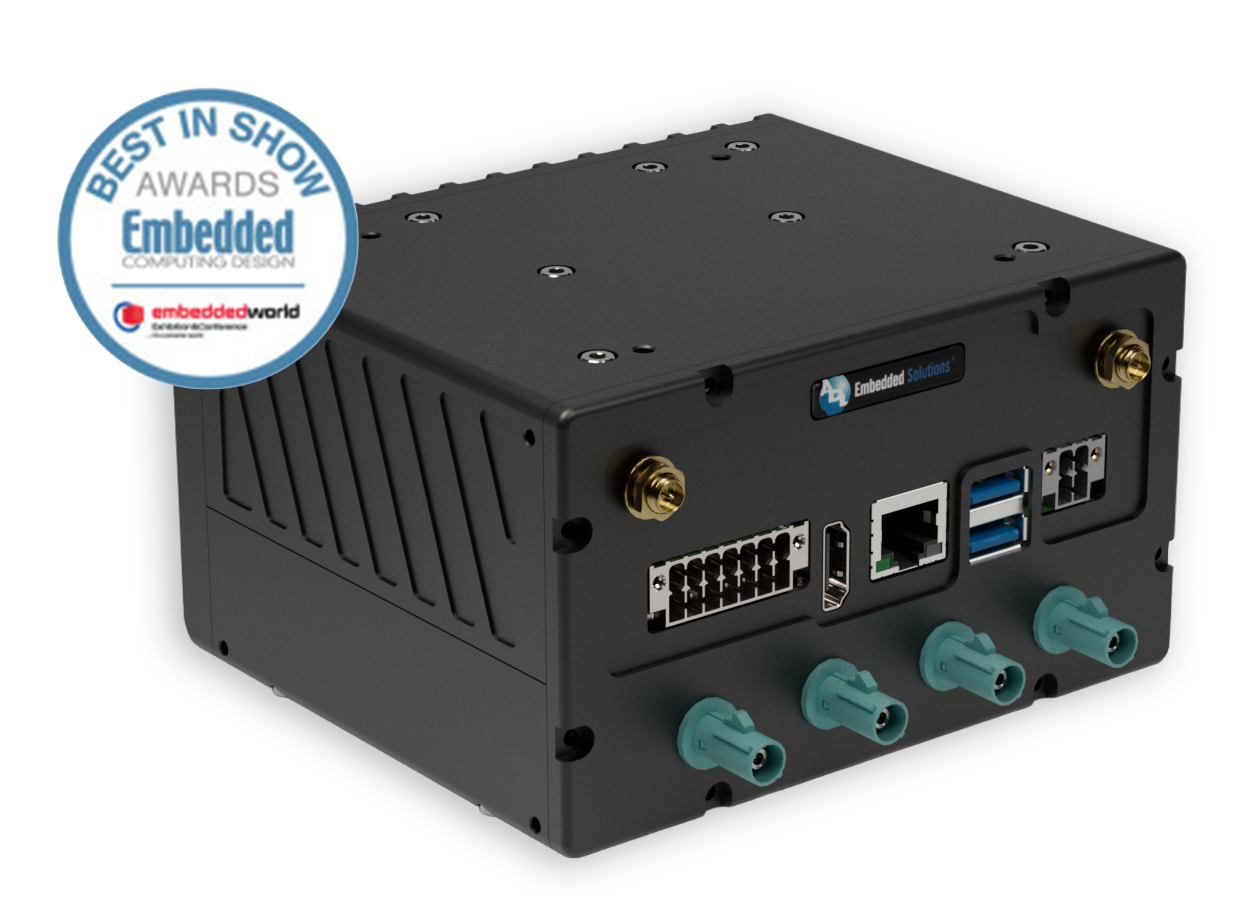
If you’re looking for a rugged, deployment-ready edge AI system designed to run autonomously when networks degrade, and synchronize intelligently when they return, that’s exactly what ADL Embedded Solution’s AI2500 is built to do.
The ADL‑AI2500 is a rugged, fanless AI edge system powered by the NVIDIA® Jetson™ Orin NX, delivering up to 157 TOPS of compute performance for demanding workloads. Engineered for space‑constrained, mission‑critical environments, it combines industrial‑grade construction with wide‑temperature operation and long‑life availability. It’s purpose-built around the same operating requirements described above: rugged, remote, reliable, secure, and fast, so your AI keeps working where it matters most.