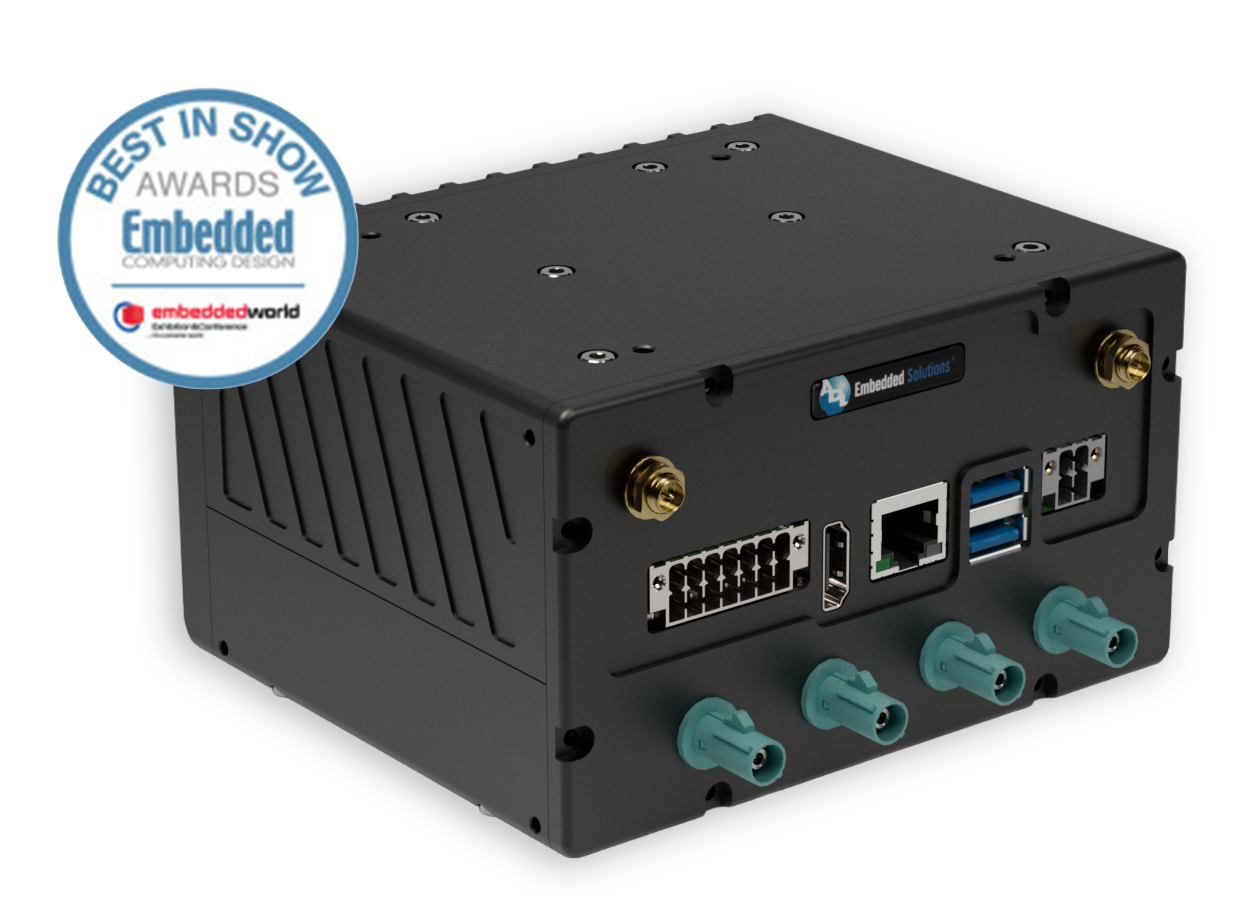
Providing high-performance embedded systems that help medical OEMs speed up time-to-market while delivering the computational power needed for advanced medical imaging, diagnostic systems, and specialized healthcare equipment.
How Does ADL Help in the Healthcare & Medical Sectors
See below how ADLES supports the medical sector by providing reliable embedded computing solutions that deliver consistent performance over extended deployment cycles while safeguarding long-term technology investments.
Limitless
A comprehensive ecosystem of medical-grade CPU and peripheral I/O components enables an optimal balance of configuration for diverse healthcare applications, ranging from portable diagnostic devices to advanced imaging systems.
Intelligent
Intel-based processing platforms deliver the computational power required for real-time medical imaging, clinical analytics, and intelligent diagnostic algorithms, enhancing patient care and clinical decision-making.
Safe
Proven expertise in medical-grade system design and support firmware guarantees reliable operation for critical healthcare applications where system dependability directly affects patient safety and clinical outcomes.
Specific
Close collaboration enables us to provide tailored system configurations that integrate the latest healthcare technologies with each customer’s specific needs.
4th Gen Intel® Core™ Dual and Quad Core; BGA1364, Intel® 8-Series PCH Lynx Point QM87 Chipset, CPU TDP 37W to 47W, Up to 8 GB DDR3L-1333/1600; 1.35V SoDIMM204 Socket, Type 1 Bottom-Stacking PCIe 104 V2.01 with Gen2 PCIe x1 Lanes and Gen3 PEG x16, 4x SATA 6 Gb/s with RAID 0/1/5/10, Backward Compatible, 2x 10/100/1000 Mbit Ethernet LAN Port, 2x RS232 COM Ports, 13x USB 2.0 Total: 8x Onboard, 2x PCIe Connector, 1x Mini PCIe Socket, 2x USB 3.0, 2x USB 3.0, Backward USB 2.0 Compatible, Onboard VGA/DVI, HDMI/DisplayPort, and eDP, Three Independent Displays, Discrete 16bit GPIO Port, 7.1 HD Audio with SPDIF In/Out, Trusted Platform Module; TPM V1.2 (ATMEL® AT97SC3205)
The ADLE3800PC – Intel® E3800 Series SoC processors; DC/Quad, Up to 8 GB DDR3L-1333; 1.35V SoDIMM204 Socket, CPU TDP 8W to 10W, Type 1 Downward-Stacking PCIe/104 V2.01 with 2x Gen2 PCIe x1 Lanes; LPC, SMBus, 2x USB 2.0, 2x SATA 3 Gb/s; Shared with mSATA socket, 2x 10/100/1000 Mbit Ethernet LAN Port; Intel i210, 2x RS232 COM Ports, 8x USB 2.0 Total: 4x USB 2.0 pin connector, 2x PCIe Connector, 1x Mini PCIe Socket, 1x USB 3.0 (Backward Compatible to USB 2.0), 1x USB 3.0, Onboard VGA/DVI, DisplayPort/HDMI, Discrete 16bit GPIO Port; PCA9535BS, No Interrupt, 7.1 HD Audio with SPDIF In/Out, PCI Express Mini Card 1.2 Socket; Compatible with Mini PCIe or mSATA modules, 90 mm x 96 mm, PCIe/104 Form Factor, Input Power = 5VDC, 5VS (12VDC for PCIe/104 Connector)
Intel® Atom® CPU Z510 (1.1GHz) or Z530 (1.60GHz), up to 2GB of memory, 2 COM ports, 8 USB, LAN (1Gb), 1 x PATA, LPT, VGA/LVDS with up to 4GB on board flash.
Speak with one of our specialists to find out more
ADL Embedded Solutions is well-versed in not only defining SBC and peripheral expansion board solutions for a variety of applications but also in designing, creating, and integrating custom enclosures that meet both low and high IP requirements for extended temperatures and rugged environment required of Healthcare & Medical projects.
Magnetic Resonant Imaging (MRI), Echocardiogram / Ultrasound and Computed Tomography (CT) employ 2D and 3D real-time imaging. Portable computed tomography (CT) scanners are used aboard ambulances and aircraft for head trauma diagnosis. CT’s have found uses outside of medical, such as material inspection. New technologies such as Molecular Imaging require the same 2D, 3D and computational power to provide timely imaging. These applications require high-bandwidth backplanes for data transfer to and from the SBC and work well with SBCs featuring 1×16 PEG PCIe lane capabilities (2.5Gb/s lanes). Similar applications requiring even greater bandwidth can benefit from SBCs featuring an integrated graphics core to eliminate the need for off-board vector processing or DSP hardware.
Timely imaging with 2D, 3D, and computational power
High-bandwidth backplanes for efficient data transfer
Eliminate off-board vector processing hardware
Medical Diagnostics & Laboratory Testing
Clinical and Biotech analyzers are used in laboratories worldwide for any number of automated analysis tasks. Blood and chemical analyzers perform automated analysis. The benefit of high performance embedded computers is the ability for OEM manufacturers to reduce the size of the equipment, thus reducing cost. Medical / clinical analyzers have found use outside of the medical laboratory such as in portable microbial detection units and environmental test labs. Low power Intel ®Atom SBCs such as the ADLS15PC and ADLD25PC or higher performance SBCs such as the ADLGS45PC or ADLQM67PC in both PC/104 and 3.5” form factors can all be deployed successfully depending on specific I/O, power, and processing power requirements.
Automated analysis systems
Reduce size and cost of equipment
Portable microbial detection units
Point of Care
Point of Care Testing (POCT) benefits dramatically from the ability to provide mobile high performance computing power to the patient that would otherwise mean the patient may have to go to another location. Low power and high performance portable computers enable many diagnostic devices to be brought near the patient or care center, thus improving time to results and reducing overall cost of diagnosis. Many devices once limited to laboratories may be now used in the field to provide near instantaneous results of tests that historically take hours or even days to get back.
Low power Intel ®Atom SBCs such as the ADLS15PC and ADLD25PC or higher performance SBCs in PC/104 and 3.5” form factors all can be deployed successfully depending on specific I/O, power, and processing power requirements.
Mobile high-performance computing power
Reduce diagnostics costs
Instantaneous test results
STAY UP TO DATE
FOLLOW OUR LATEST DEVELOPMENTS at Adl embedded solutions